Connecting the Dots – PCA Conflicts of Interest Data

By Adam Tavares and Gary Silveria
Back in 2023 a study was funded by the Department of Pesticide Regulation through the Sustainable Pest Management Workgroup. The premise was to evaluate whether “sales PCAs” made different decisions then “independent PCAs” based on assumptions around sales structures and incentives.
Initially the results of the study were buried until the JLAC audit was initiated in June 2025. At that time, DPR presented a limited summary of the results which found that, regardless of their employment type, PCAs base their recommendations and advice to growers more on risk aversion (agronomics) than on financial incentives.
This study conducted by Jay Rosenheim and Michael Culshaw-Maurer was recently published in the Journal of Pest Science – Conflicts of interest, risk aversion, and pesticide use in California agriculture | Journal of Pest Science. Rosenheim additionally was generous enough to publish a summary in our own CAPCA Adviser – see December 2025 issue PCAs, Conflicts of Interest and Pesticide Use in California Agriculture on page 42.
So why does this matter to you? The PCA License was created back in 1972 due to the sales conflict. The whole premise of the license was built around eradicating that perception, but despite best efforts it continues to follow PCAs. In the late 1990’s there was proposed legislation to strip PCAs from any type of compensation model to reduce pesticide use. But CAPCA and industry stakeholders successfully fought back against this faulty assumption. But it continues to be pervasive in discussions around the Capitol, within Agencies and activist organizations. While this study is a solid data to point to educate around, it likely will not be enough to shift the tides of perception.
So what do we do about this? As CAPCA we continue to educate and support the productive evolution of the PCA License so that you can continue to serve as the trusted Adviser in your career space as the industry evolves. But CAPCA can’t do it for free, our Advocacy is building traction but requires constant staff attention, consultants, a strong PAC and engaged Committee. Recently, there has not only been a lot of criticism of associations, but an attitude that CAPCA has no value to your license without the ability to track all CE hours. We would ask you to consider, what value does your license have if it doesn’t exist due to poor assumptions or even the actions of bad actors within the licensing community? These things rise to the top without a watch dog voice like CAPCA rebutting the assumptions and bringing real world experiences and data back to the table. That is why we are proud to wrap up the PCA engagement portion of the CDFA grant that captured all the non-chemical decisions and actions you take every day in the field. From preliminary feedback, we understand this data tells the other side of the story, the why an application may be needed. In the absence of perspective on pest pressure, scouting and non-chemical actions, outside stakeholders can only draw conclusions on PCA behavior with the PUR. We know that use shifts from a variety of factors including seasonal pest pressure and climate factors, but from the outside, changes in use whether positive or negative are hard to distinguish.
The 2025 December Adviser article is just the start of an ongoing series of outreach opportunities to highlight data for PCAs and CAPCA to arm ourselves with as we move forward in California’s political landscape. We hope you will renew your membership and recognize the value of fighting for your license and industry. We hope you will encourage your employer to become a corporate partner in the coming year or even raise your commitment to invest in this discussion. We hope that you will consider attending local CAPCA Chapter events or even the CAPCA Conference for your CE requirements. CAPCA reinvests everything we earn right back into benefiting the PCA license. No one else is going to do that for you.
DPR Releases 2024 Air Monitoring Network Report

Air samples collected and tested in 2024 found no pesticide detections were above DPR’s health screening levels
PUBLISHED ON
SACRAMENTO, Calif. – The California Department of Pesticide Regulation (DPR) released its 2024 Air Monitoring Network (AMN) Report, which analyzed over 200 samples collected in four California communities, comparing pesticide detections to health protective thresholds. Last year, no pesticides detected at DPR air monitoring stations exceeded those thresholds.
In 2024, 13 pesticides were detected at quantifiable levels, including 1,3-D, chloropicrin, methyl bromide (MeBr), and methyl isothiocyanate (MITC). All were detected below health protection thresholds, which means health effects are unlikely to occur.
“Monitoring air in agricultural communities helps us better understand potential pesticide exposure and evaluate the effectiveness of our protections,” said DPR Director Karen Morrison.
DPR’s AMN includes four monitoring stations located in Oxnard, Shafter, Santa Maria and Watsonville — agricultural communities with high pesticide use. The stations collect weekly air samples, each of which is tested for 40 pesticides and breakdown products that have higher toxicity, use, or likelihood of becoming airborne.
SAVE THE DATE: DPR will host a series of virtual public meetings in December to provide information on the 2024 AMN Report for the communities where monitors are located.
More information on the meetings is available on DPR’s website.
— California Department of Pesticide Regulation
Link to Original Article (courtesy of Morning Ag Clips)
Photo by Geri Mis on Unsplash
Wonder where Pesticide Regulations are headed in California?
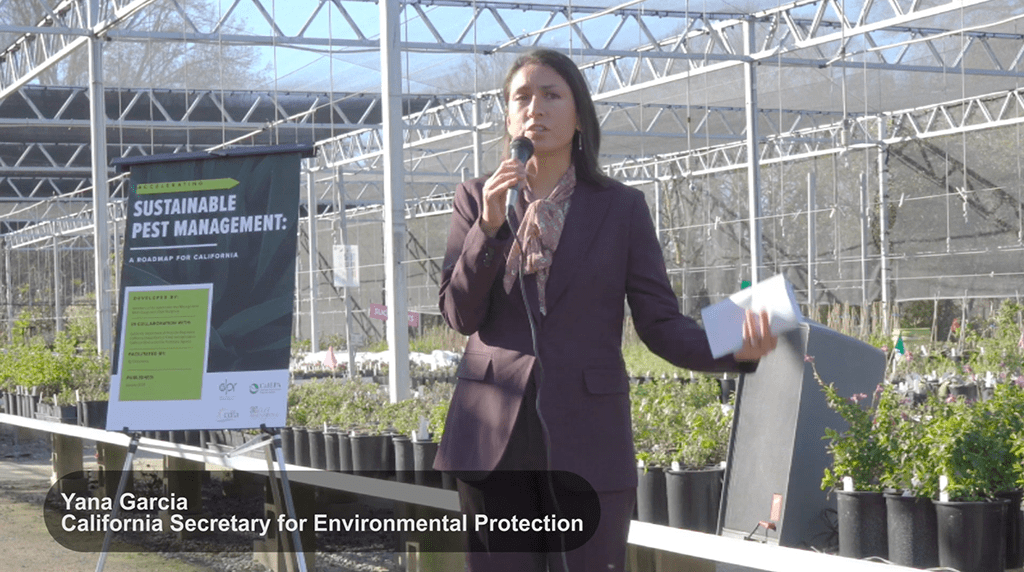
Start by reading the Sustainable Pest Management Roadmap and DPR Strategic Plan. And make sure you renew your CAPCA membership because CAPCA is working tirelessly to make sure that the PCA is at the center of the discussion and solution to keep your career pathway moving forward.
Statewide Notification
Rats in the Valley