CALL TO ACTION:
- Sign up for a free account at cropsteward.com
- Start inputting data right away (all data is anonymized to the county level)
- Even if you don’t have rats, your data is still valuable to the tracking system!
Over the last year and a half working on the rat infestation issue, CAPCA has been faced with several questions and opportunities to tell the story of impact to help leverage resources and response where it matters. In simple terms, most legislators and agency representatives have a hard time grasping the scale of the rat problem is that some of you are dealing with in the Central Valley.
At times, it took shocking numbers to help someone understand the sharp difference between maintenance level pressure and the infestation currently being addressed. The population numbers in an infestation require a whole different level of tools.
CAPCA Collaborates with CDFA
Both organizations have worked on a way to visualize and monitor the scope of the impact that rats are causing across the state in real time. We are doing this with a blend of data:
- Crowd-sourced Crop Steward data
- PUR data of aluminum phosphide, diphacinone, zinc phosphide, and chlorophacinone
- CDFA and UC scouting and trapping data
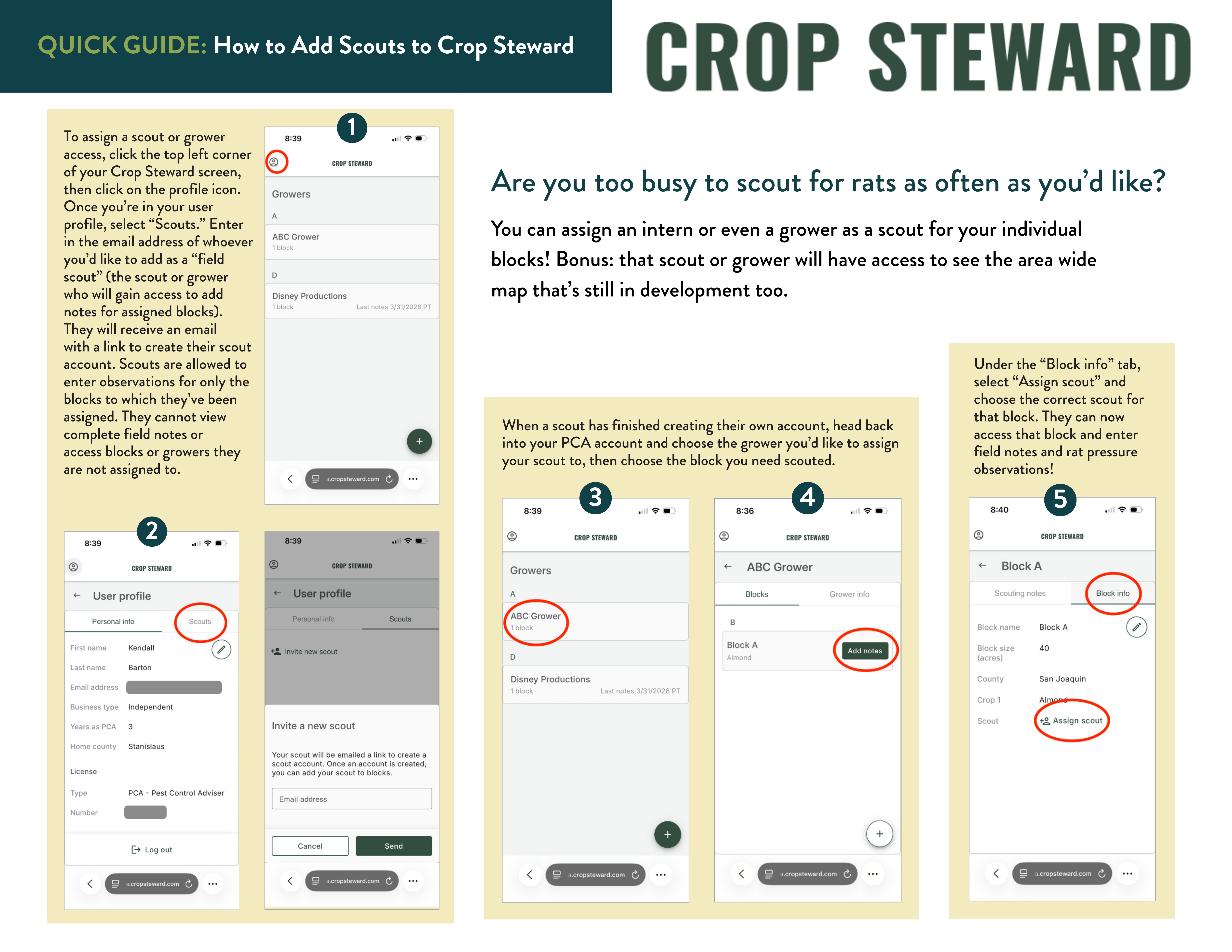
This anonymized county-level data was the solution we presented when stakeholders wanted a public facing map. We knew that public facing would severely impact the usability of the tool – so we offered Crop Steward as the vehicle to house the data. Crop Steward provides a firewall by which only PCAs and anyone they assign in their workflow can access the data.
There is a Guest level that can view data, which we can share with collaborative agencies and commodity groups to provide a more real-time view of what is being reported.
Nothing Like This Currently Exists
When you look at PUR data alone, it doesn’t tell the full story of pest pressure or quantify the level of pressure being addressed. When we look at incoming calls or reports from PCAs in the field, it doesn’t give us the full picture of acreage of collective impact to each county. Nor does the CDFA or UC trapping give us the broad scope of the other two elements. But combined, we hope that it will tell a story to drive the support, solutions and funding needs the industry has been asking for.
How Can You Participate in Telling This Larger Story?
First, create an account in Crop Steward – it’s free!
Before being shared, the data is fully anonymized. That means no PCA names, license numbers, company information, grower names, or field-identifying details are shared outside of CAPCA.
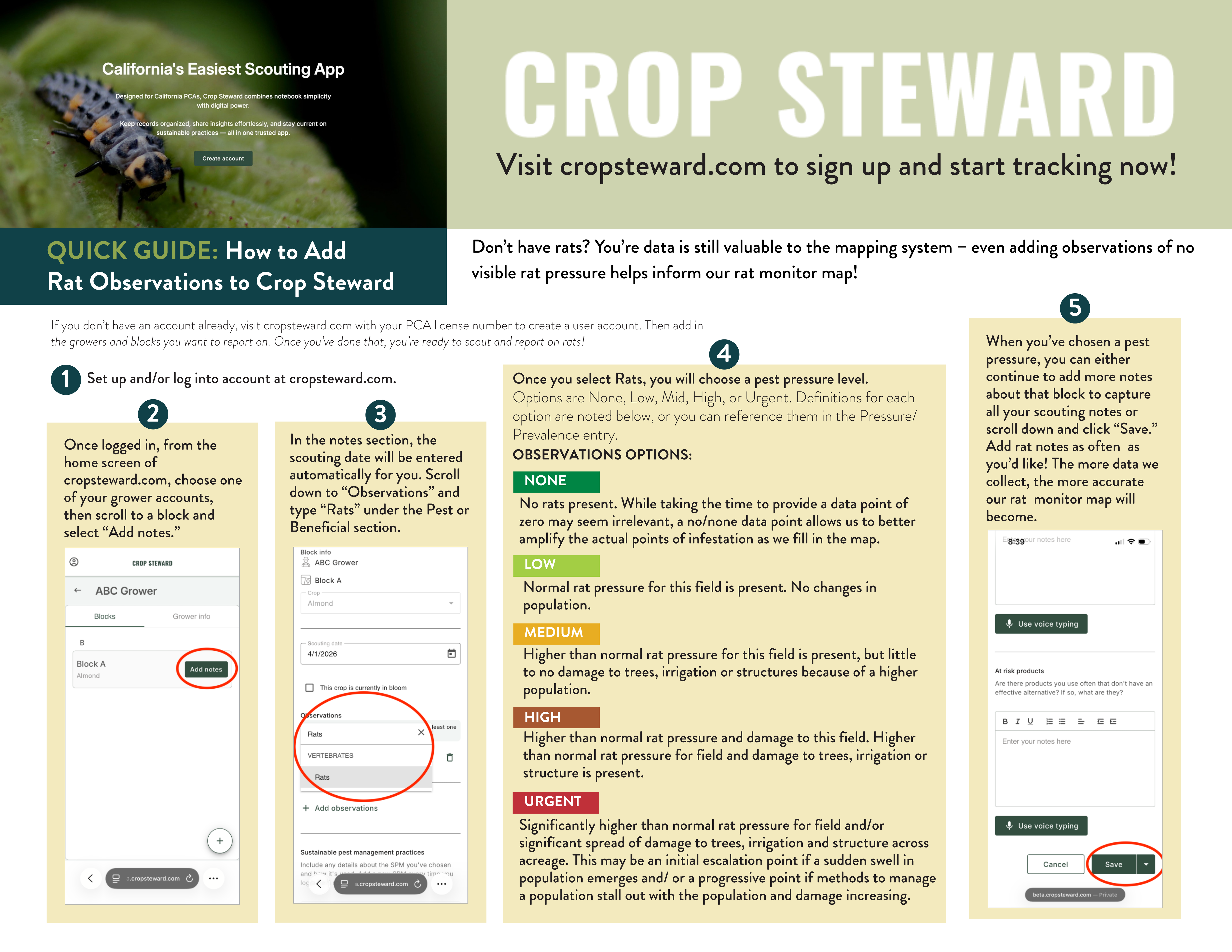
Visit cropsteward.com with your PCA license number to create a user account. Then add in your growers and blocks. See page 44 for a quick guide on setting up your account now!
Next add rat observations to Crop Steward – once you’ve set up your account, you’re ready to scout for rats! Follow the Quick Guide instructions (below on this page) to learn how to do this.
Start inputting your data now so, when the map goes live in May,
we have data ready to integrate with PUR to showcase the map.
Click the images below to download them.